China has become a major sourcing base for connected toys, combining plush production with sensors, speech systems, and mobile software. For global buyers, the phrase AI plush toy now means more than a soft character with a speaker. It can describe a toy that listens, responds, remembers preferences, or supports guided play.
Market evidence is encouraging, but not perfectly clear. Circana reported that global toy sales fell about 7% in 2023 across its tracked markets, showing strong pressure on discretionary spending. Yet its data also highlighted continued interest in innovative, technology-led play experiences. Grand View Research has separately projected steady growth for the global smart toys market through the decade. These reports do not measure AI plush toy products alone. That gap matters. Buyers should avoid inflated market claims and examine product-level evidence instead.
China’s leading manufacturers increasingly offer integrated services, including character design, embedded hardware, sample development, packaging, and export support. A credible supplier should explain battery safety, washable-part design, data handling, voice-response limits, and software updates. The OECD AI Principles and international toy-safety frameworks provide useful reference points for responsible development, although compliance requirements vary by destination. Ask for test reports, factory audit records, material specifications, and realistic production timelines. Visit the sample room if possible. Touch the fabric. Test the microphone in a noisy workshop. Small details reveal manufacturing discipline.
The strongest suppliers may not be the cheapest. A low quotation can hide weak firmware, unstable supply chains, or expensive revisions. This guide examines China’s top AI plush toy manufacturers for global buyers, while recognizing one uncomfortable truth: this category is still developing, and supplier claims deserve careful verification.
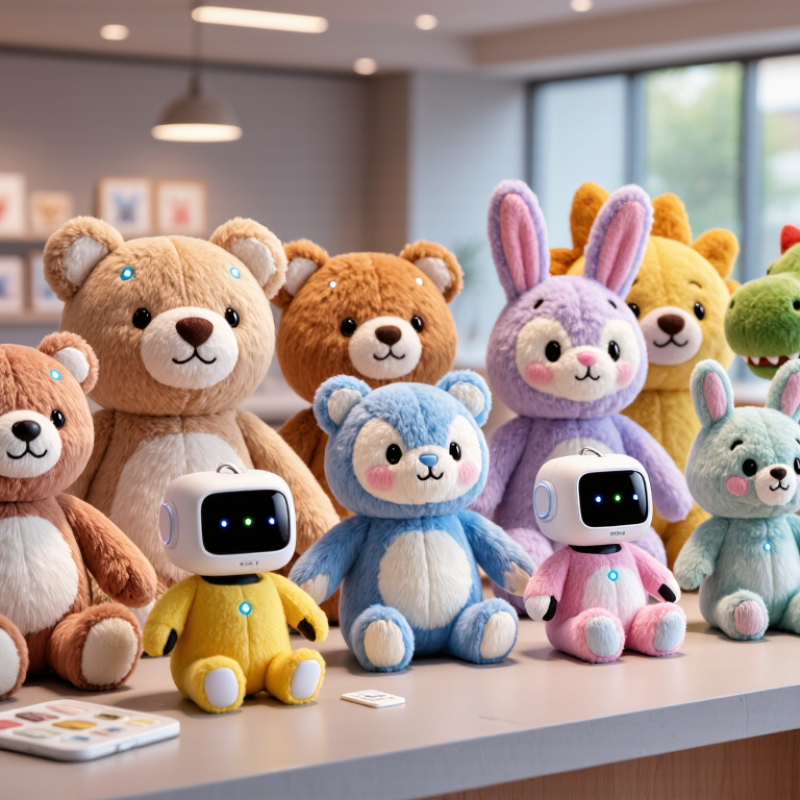
What Defines an AI Plush Toy Manufacturer in China
A China AI plush toy manufacturer is more than a factory with cute samples. It should combine textile production, embedded electronics, software integration, and quality control. Experienced manufacturers can explain how voice modules, microphones, speakers, and batteries fit inside a soft toy. They should also provide material specifications, production timelines, sample records, and test reports. A reliable team welcomes technical questions. It does not hide behind attractive photos.
Tips: Ask for a working sample before discussing large orders. Check stitching around the speaker opening. Test voice recognition in a noisy room. Request details about battery protection, charging design, washable parts, and data handling. Confirm whether the manufacturer controls key components or depends heavily on unknown suppliers. Clear answers matter.
Professional manufacturers usually offer a repeatable development process. This may include concept review, prototype testing, pilot production, inspection, and packaging checks. Watch how they document changes. A small alteration to fabric thickness can affect sound quality and comfort. A different stuffing density may change the toy’s shape after shipping. These details reveal practical experience.
No factory is perfect. Even capable teams may underestimate mold adjustments or software debugging time. That is why realistic schedules and written quality standards are important. Buyers should review sample performance, communication speed, and corrective actions, not only the lowest quotation. Ethical sourcing, traceable materials, and compliance documentation also help establish long-term trust.
FAQS
It combines textile production, embedded electronics, software integration, and quality control. A working sample matters. The team should explain microphones, speakers, batteries, materials, testing, and timelines clearly.
Photos cannot reveal muffled sound or weak stitching. Test voice recognition in a noisy room. Check the speaker opening carefully. Some prototypes answer awkwardly, and that deserves honest review.
Development may include concept review, hand-sewn samples, electronic prototypes, voice testing, pilot production, and final inspection. Teams should document every change. A thicker fabric can reduce sound clarity.
Common parts include microphones, speakers, microcontrollers, voice modules, pressure sensors, motion sensors, and temperature sensors. Some toys use edge processing. Others rely on wireless connections. Small devices still misunderstand accents.
Check seam strength, fabric composition, battery protection, charging temperature, wire insulation, and drop-test results. Ask about applicable toy-safety testing. A charming voice cannot repair a loose seam.
Ask whether the toy works without cloud access. Request clear data-handling rules and parental settings. Offline functions can reduce privacy concerns. Wireless updates need careful protection.
Confirm charging design and protection against overheating. Removable electronics may simplify maintenance and recycling. Check whether washable parts can be removed safely. Small design details are easy to miss.
Review sample performance, communication speed, supplier transparency, inspection records, and corrective actions. Request repeatability data and written quality standards. No factory is perfect. A realistic schedule is safer than a cheap promise.
Conclusion
China’s AI plush toy manufacturers combine soft, child-friendly design with interactive technologies such as voice recognition, touch sensors, wireless connectivity, and programmable responses. Their product development typically begins with user research and concept design, followed by prototype testing, software integration, safety evaluation, and mass-production preparation. Leading manufacturers focus on creating reliable, engaging, and age-appropriate products while balancing appearance, functionality, battery performance, and production cost.
For global buyers, evaluating an AI plush toy supplier requires more than reviewing samples. Buyers should examine manufacturing capabilities, communication efficiency, customization support, quality-control procedures, production capacity, and experience with international orders. Clear agreements should define materials, packaging, delivery schedules, inspection standards, and after-sales responsibilities. Importers should also confirm product documentation, labeling, electrical safety, data protection, and applicable market compliance before placing an order. Careful factory audits, sample approval, pre-shipment inspections, and batch testing can help reduce risks and ensure consistent quality for international distribution.